

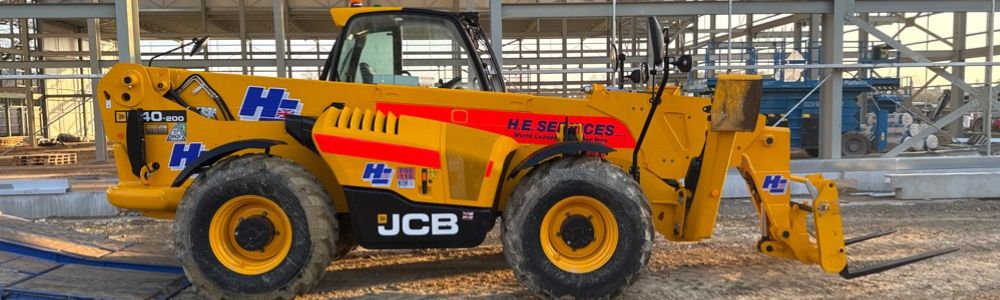
If you are looking for a machine that can lift, carry and place materials around a construction site, a telehandler can be an incredibly useful addition to your fleet. But when you start comparing used telehandlers, it can be difficult to know exactly what you should check before committing to a purchase.
Should you focus on the number of hours? How important is the service history? What should you look for when inspecting the boom, tyres and hydraulics? And, perhaps most importantly, how do you know you are getting a reliable machine for your money?
Buying used construction machinery can offer excellent value, but it pays to do your homework first. In this guide, we take a closer look at what to check when buying used telehandlers, as well as what to look for when choosing a machine from a reputable UK machinery dealer.
What Will You Use The Telehandler For?
Before looking at individual used telehandlers, start with what you actually need the machine to do.
Telehandlers are flexible machines, but different models have different lifting capacities, reach heights and dimensions. A compact telehandler might be ideal for working in restricted spaces, while a larger machine could be better suited to demanding construction projects where heavy loads need to be lifted to greater heights.
Think about the materials you will be handling, the maximum weight you need to lift and the height and reach required on your typical site.
It is also worth considering which attachments you need. Forks are commonly used for palletised materials, while buckets and other attachments can make a telehandler suitable for a wider range of jobs.
If you are unsure which machine is right for you, the team at International Plant Sales should be able to talk through your requirements and recommend suitable options.
How Many Hours Has The Machine Worked?
One of the first things buyers search for when looking at used telehandlers is the machine’s hours.
Hours are certainly important, but they should be considered alongside the machine’s age, service history, previous use and overall condition. A telehandler that has been regularly maintained throughout its working life could be a better purchase than a lower-hours machine that has been poorly looked after.
Ask to see the hour meter and check that the recorded hours make sense alongside the available maintenance records. If the seller can provide information about the machine’s previous ownership and usage, even better.
Does It Have A Full Service History?
If you are planning to buy a used telehandler, never underestimate the value of a good service history.
Ask questions such as:
- Has the machine been serviced regularly?
- Who carried out the servicing?
- Are service records available?
- Have any major components been replaced?
- Has the machine had any significant repairs?
- How many previous owners has it had?
A properly maintained telehandler is much easier to assess than one with a vague or incomplete history.
It is also worth asking about the machine’s previous working environment. A telehandler used regularly on demanding construction sites may have experienced different levels of wear compared with a machine used for lighter applications.
The more information you can get before buying, the easier it is to make an informed decision.
What Condition Is The Boom In?
The boom is one of the most important parts of a telehandler, so it deserves a thorough inspection.
Look closely for obvious damage, cracks, excessive corrosion or signs of repairs. Pay particular attention to areas around the boom, pins and joints.
If you are viewing the machine in person, operate the boom through its normal range, provided this is done safely and by a competent operator. Listen for unusual noises and watch for jerky or inconsistent movement.
Hydraulic cylinders should also be checked for signs of leaks or damage. Hydraulic problems can become expensive if they are ignored, so it is better to identify potential issues before purchasing rather than after the machine arrives on site.
Are The Tyres In Good Condition?
Tyres are another area that is easy to overlook when comparing used telehandlers.
Take a good look at the tread and sidewalls. Check for excessive wear, cuts, cracking or other damage. Consider whether the existing tyres are suitable for the type of surface where you intend to operate the machine.
Will the telehandler mainly be working on rough ground? Will it spend a lot of time on tarmac? Does your site include muddy or uneven terrain?
These questions can help you decide whether the tyres currently fitted are suitable for your work or whether you may need to budget for replacements.
Does The Engine Run Smoothly?
Whenever possible, see the telehandler running before you buy.
Listen to the engine when starting from cold and pay attention to unusual noises, excessive smoke or anything else that seems out of the ordinary. Check the controls and make sure the machine responds as expected.
You should also check the transmission, brakes and steering. A test operation can reveal issues that are not immediately obvious from photographs.
If you cannot visit the machine yourself, ask the seller whether they can provide a detailed video showing the telehandler starting, moving and operating its main functions.
What About The Cab And Controls?
It is easy to concentrate on the mechanical components and forget about the operator’s environment.
Take a look inside the cab. Are the controls clearly labelled and working properly? Is the seat in good condition? Do the instruments and warning lights operate as they should?
Check the visibility from the cab and look at the condition of the windows, mirrors and other visibility aids. Damage to glass or poor visibility can have a significant impact on safe operation.
The condition of the cab can also tell you something about how the machine has been treated throughout its working life.
Should You Consider Manitou Telehandlers?
If you have been researching used telehandlers, you have probably come across Manitou telehandlers.
Manitou is a well-known manufacturer of handling equipment, with construction telehandlers designed for applications including loading, unloading and transporting materials. Its range includes machines with different lifting capacities and reach heights, meaning there are options for a variety of applications.
There is also a strong reason to consider the availability of support, parts and servicing when choosing a brand. A machine is an investment, so you want to know that help will be available if you need it further down the line.
Is It Worth Buying A Used Telehandler?
So, should you buy a used telehandler rather than purchasing from new?
For many businesses, used telehandlers can offer an attractive balance between capability and cost. A well-maintained used machine can provide the lifting performance you need without the initial cost associated with buying brand-new equipment.
The key is to avoid making your decision based purely on price.
When comparing used telehandlers, consider the whole picture: condition, hours, maintenance, specifications, attachments, safety documentation, brand reputation and aftersales support.
If you find a machine that ticks all the right boxes and comes from a reputable seller, buying used can be a very sensible way to add valuable equipment to your fleet.
Find Used Telehandlers At International Plant Sales
If you are currently looking for used telehandlers for sale in the UK, we have a dedicated telehandler section featuring a selection of used machines.
Our current stock includes a selection of JCB and Manitou telehandlers for sale. Current listings include a 2021 JCB 540-140, as well as several Manitou models including the MT1840, MT1335, MT625 EASY and MT933 EASY. The available machines vary in age and recorded hours, so buyers can compare different options depending on their requirements and budget.
We welcome customers who want to visit us in person. If travelling to view a machine is not convenient, we can also provide images and video calls through WhatsApp.
Ready to start looking? Get in touch today to find out more.
Don’t forget to also follow us on social media for the latest updates and special offers:
Facebook – https://www.facebook.com/InternationalPlantSales
Instagram – https://www.instagram.com/internationalplantsales/
X – https://twitter.com/ipsplant
TikTok – https://www.tiktok.com/@internationalplantsales
YouTube – https://www.youtube.com/channel/UC7t0BLuCEHme1fPsZVcuuZw
All information correct as of: 16th September 2026.
